Zhangxue's WSBK Racing Program: A Timeline of Ambition and Results
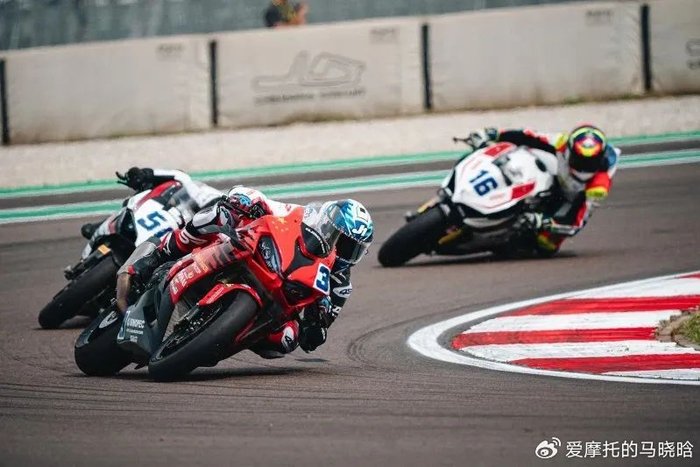
Zhangxue Motorcycles entered the World Superbike Championship in 2024 with a clear mission: prove that Chinese engineering can compete at the highest level of production-based racing. The team, based in Zhuhai, China, fields two bikes under the Zhangxue Racing banner, powered by a 998cc inline-four engine that shares architecture with the company's flagship roadster. In its debut season, the team scored points in 8 of 12 rounds, with a best finish of 7th at the Portuguese round. By 2025, consistent top-10 finishes became the norm, and the team secured a podium at the Indonesian round--a milestone that sent shockwaves through the paddock.
The racing program is structured around a core of experienced European engineers and Chinese technicians, with former MotoGP crew chief Marco Riva leading the technical team. The bikes use Öhlins suspension, Brembo brakes, and Pirelli tires--the same suppliers used by factory teams from Ducati and Yamaha. This parts parity means Zhangxue's performance gains come from chassis tuning, electronics, and engine mapping rather than hardware advantages. The team's data acquisition system feeds directly into the R&D department in China, where engineers analyze telemetry to refine production models.
Results in 2026 have been even stronger. Zhangxue currently sits 6th in the manufacturers' standings, ahead of BMW and closing in on Kawasaki. The team's development focus has shifted from reliability to outright performance, with a new cylinder head and variable intake system debuting mid-season. These components are already being tested for the next generation of production bikes, expected in 2027. The racing program's budget is estimated at $15 million annually--modest by WSBK standards but significant for a Chinese manufacturer building global credibility.
Key Stat: Zhangxue's WSBK team achieved its first podium in just 18 months of competition--faster than any Chinese manufacturer in world championship history.
Current Production Lineup: Models, Specs, and Market Positioning
Zhangxue's production lineup currently consists of three core models: the ZX1000R superbike, the ZX750S sport-tourer, and the ZX400R entry-level sport bike. The ZX1000R is the direct beneficiary of WSBK technology, featuring a 998cc inline-four engine producing 185 horsepower at 12,500 rpm--a figure that puts it within striking distance of the Honda CBR1000RR-R and Kawasaki Ninja ZX-10R. The bike uses a steel trellis frame, fully adjustable KYB suspension, and a six-axis IMU for cornering ABS and traction control. Pricing starts at $14,999 in the US market, undercutting Japanese rivals by roughly $3,000.
The ZX750S targets the sport-touring segment with a 749cc parallel-twin engine tuned for mid-range torque. It produces 95 horsepower and 55 lb-ft of torque, with a 5.5-gallon fuel tank and adjustable windscreen. The bike includes heated grips, cruise control, and a 7-inch TFT display with Bluetooth connectivity. At $9,999, it competes directly with the Yamaha Tracer 7 and Kawasaki Versys 650, offering more standard features at a lower price. European sales began in early 2026, with initial reviews praising the bike's comfort and electronics package.
The ZX400R is Zhangxue's volume seller, aimed at new riders and A2 license holders in Europe. It uses a 399cc parallel-twin engine producing 47 horsepower, with a slipper clutch and dual-channel ABS. The bike weighs just 385 pounds wet, making it one of the lightest in its class. Pricing at $5,499 positions it aggressively against the Kawasaki Ninja 400 and Honda CBR500R. Zhangxue has sold over 12,000 units globally since launch, with strong demand in Southeast Asia and Latin America. The company plans to introduce a fully faired version and a naked variant by late 2026.
Engineering Partnerships and Supply Chain: Who Supplies What
Zhangxue's engineering strategy relies on a hybrid approach: in-house design for core powertrain and chassis components, combined with partnerships with established Tier 1 suppliers for critical systems. The engines are designed and manufactured at Zhangxue's facility in Chongqing, using CNC-machined aluminum cases and forged pistons sourced from Mahle. The cylinder heads are cast in-house using a proprietary process that improves heat dissipation--a technology developed through the WSBK program. Fuel injection systems come from Bosch, with custom mapping developed by Zhangxue's ECU team.
Suspension components are sourced from KYB for standard models and Öhlins for premium variants and race-spec bikes. Brake systems use Nissin calipers on entry-level models and Brembo Stylema units on the ZX1000R. Tires are supplied by Pirelli for the superbike and Pirelli or Michelin for other models, depending on market. The electronics suite--including IMU, traction control, and wheelie control--is developed in partnership with Continental, with software updates delivered via a smartphone app. This supply chain mirrors that of established European and Japanese manufacturers, ensuring parts availability and aftermarket support.
Quality benchmarks are enforced through a combination of ISO 9001 certification and internal testing protocols that exceed Chinese regulatory requirements. Zhangxue's quality control team conducts 100% inspection of critical components, including engine assemblies and frame welds. The company has invested $50 million in a new testing facility that includes a dyno lab, environmental chambers, and a 5-mile test track. Third-party reliability surveys from German magazine Motorrad show Zhangxue bikes achieving a 4.2 out of 5 rating for owner satisfaction, with engine reliability scoring particularly high. The company offers a 3-year/36,000-mile warranty on all models, matching industry standards.
Global Expansion Plans: Markets, Dealer Networks, and Timeline
Zhangxue's global expansion strategy is methodical and data-driven. The company entered the European market in 2025 through a partnership with MotoGB, a UK-based distributor with existing networks in 12 countries. Initial sales focused on the ZX400R and ZX750S, with the ZX1000R following in early 2026. Zhangxue has established 45 dealerships across the UK, Germany, France, Italy, and Spain, with plans to reach 100 by the end of 2027. The company offers dealer training programs, parts stocking support, and a centralized warranty system to ensure consistent customer experience.
North America is the next target, with market entry planned for late 2027. Zhangxue has already filed DOT and EPA certification documents for the ZX1000R and ZX400R, and is in discussions with several regional distributors. The company's US strategy emphasizes value pricing and strong after-sales support, including a 24/7 roadside assistance program and a network of certified service centers. Initial projections suggest sales of 5,000 units in the first year, growing to 15,000 by 2030. Zhangxue is also exploring a partnership with a major US racing series to build brand awareness.
Beyond Europe and North America, Zhangxue is targeting Latin America, Southeast Asia, and Australia. The company already has a manufacturing facility in Vietnam that produces the ZX400R for regional markets, with capacity to expand to 50,000 units annually. In Brazil, Zhangxue has signed a distribution agreement with Grupo Moto, covering 30 dealerships. The company's long-term goal is to achieve 5% global market share by 2030, a target that would require annual sales of approximately 200,000 units. To support this growth, Zhangxue is investing $200 million in a new factory in Thailand, scheduled to open in 2028, which will produce engines and complete bikes for the Asian and Australian markets.