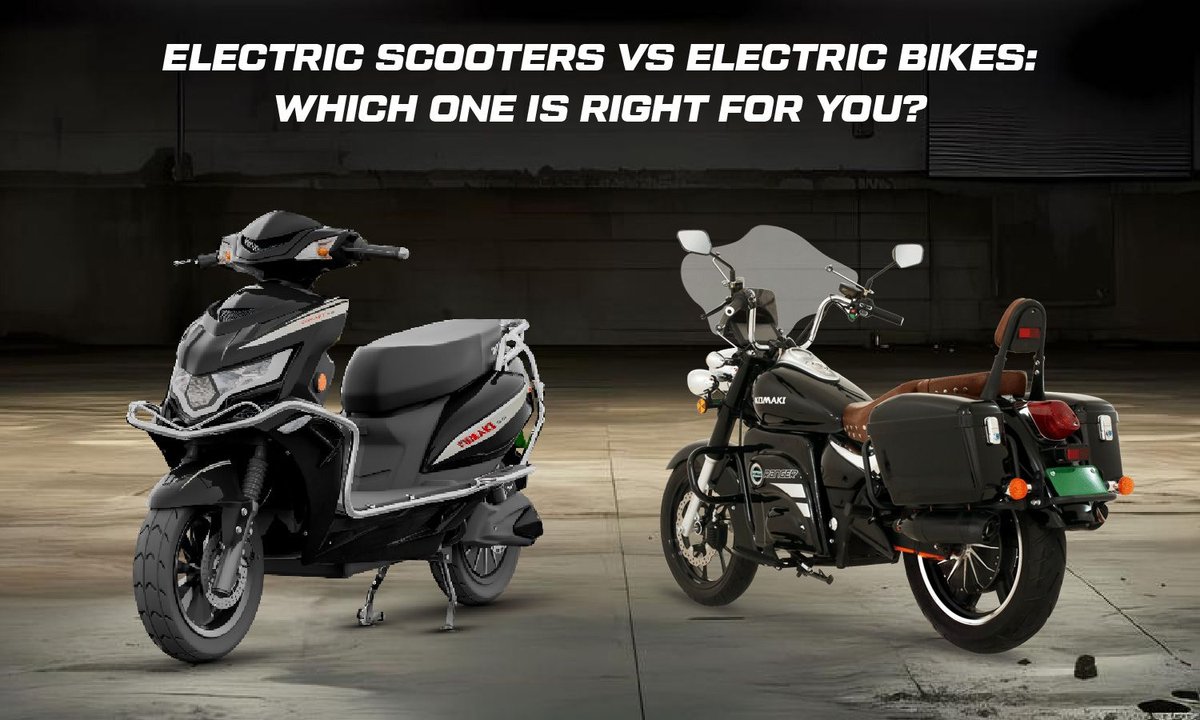
The Chinese EV two-wheeler market has exploded in 2026, offering everything from lightweight electric scooters for city errands to high-performance electric motorcycles that rival gas-powered bikes. But with so many options, the biggest question remains: should you buy an electric scooter or an electric motorcycle? The answer depends on your local laws, daily commute, budget, and how much thrill you want from your ride. This guide breaks down the key differences across legal classification, performance, cost, and practicality, with specific Chinese brand recommendations based on real ownership data.
Key Stat: In 2025, Chinese EV two-wheeler sales exceeded 55 million units globally, with e-scooters accounting for 85% of volume but e-motorcycles capturing 40% of revenue due to higher price points. (Source: China EV Two-Wheeler Industry Report 2026)
1. Legal Classification: License, Registration, and Helmet Laws
The single most important factor in choosing between an e-scooter and an e-motorcycle is how your local government classifies each vehicle. In the United States, electric scooters with a top speed under 20 mph (32 km/h) and a motor under 750 watts are often treated as bicycles, meaning no license, no registration, and no insurance required. However, many Chinese e-scooters like the NIU MQi GT EVO or Yadea G5S can reach 45 mph (72 km/h), which pushes them into moped or motorcycle territory depending on your state. For example, California requires a motorcycle license (M1 or M2) for any two-wheeler exceeding 30 mph, while Texas classifies scooters under 50cc equivalent as mopeds requiring a Class C license with a motorcycle endorsement.
Electric motorcycles like the Zeeho AE8 or CFMoto 800NK-E are unequivocally motorcycles in every jurisdiction. You need a full motorcycle license (M1 in most states), vehicle registration, and liability insurance. Helmet laws also differ: many states require helmets only for motorcycles, but some apply universal helmet laws to all powered two-wheelers. In Europe, the L3e-A1 category covers e-motorcycles up to 11 kW (15 hp), requiring an A1 license, while L1e-B covers e-scooters up to 4 kW, requiring only a car license or moped permit. China itself has a tiered system: e-scooters under 25 km/h (15.5 mph) and 400W motor are classified as electric bicycles with no license needed, but faster models require a motorcycle license and plate. Always check your local DMV or transport authority before buying.
2. Performance: Top Speed, Acceleration, and Range
Performance is where the two categories diverge dramatically. Chinese e-scooters in the premium segment (NIU MQi GT EVO, Yadea G5S, Aima M1) typically offer top speeds between 45-60 mph (72-97 km/h) and 0-30 mph acceleration in 4-6 seconds. Their range varies from 40-80 miles (64-129 km) in real-world riding, depending on battery capacity (usually 2-4 kWh) and riding style. These scooters use hub motors or mid-drive motors rated between 1.5-4 kW continuous power. They are perfectly adequate for urban commuting, errands, and short highway hops, but sustained highway cruising at 65+ mph will drain the battery quickly and may overheat the motor on some models.
Chinese electric motorcycles like the Zeeho AE8, CFMoto 800NK-E, and the upcoming Xiaodao XD2000 offer a completely different experience. Top speeds range from 75-110 mph (121-177 km/h), with 0-60 mph times as low as 3.5 seconds for performance models. Battery packs are larger (6-15 kWh), providing real-world ranges of 80-150 miles (129-241 km). The Zeeho AE8, for instance, uses a 7.2 kWh battery and a 12.5 kW motor, giving it a top speed of 100 mph and a range of about 90 miles in mixed riding. These motorcycles have proper suspension, disc brakes with ABS, and chassis designed for stability at high speeds. If your commute includes highways or you want the thrill of acceleration, an e-motorcycle is the clear choice. For stop-and-go city traffic, an e-scooter's lighter weight and lower top speed are actually advantages.
3. Cost Analysis: Purchase Price, Insurance, Charging, and Maintenance Over 3 Years
Cost is a major differentiator. A premium Chinese e-scooter like the NIU MQi GT EVO or Yadea G5S costs between $3,000 and $5,000 USD. Insurance for an e-scooter classified as a moped or bicycle can be as low as $100-$300 per year, compared to $400-$1,200 per year for a full motorcycle policy. Charging costs are minimal: at $0.13/kWh, a full charge for a 3 kWh scooter battery costs about $0.39, giving you 50 miles of range -- that's less than $0.01 per mile. Maintenance is also cheaper: no chain adjustments (most use belt or hub drive), no oil changes, and brake pads last 8,000-12,000 miles. Over three years, total ownership cost (purchase + insurance + charging + maintenance) for a premium e-scooter is roughly $4,500-$6,500.
An entry-level Chinese e-motorcycle like the Zeeho AE8 starts around $7,000, while higher-performance models like the CFMoto 800NK-E can reach $12,000-$15,000. Insurance is higher due to the vehicle classification and higher speeds. Charging a 7.2 kWh battery costs about $0.94 per full charge, yielding 90 miles of range -- still under $0.01 per mile. Maintenance is similarly low, but tires wear faster due to higher speeds and weight, and you may need to replace the belt or chain every 10,000-15,000 miles. Over three years, total ownership cost for an e-motorcycle ranges from $9,000 to $18,000. The e-scooter saves you $3,000-$10,000 over three years, but you sacrifice performance and highway capability.
4. Practicality: Parking, Storage, Cargo, and Passenger Carrying
Practicality often tips the scales toward e-scooters for urban dwellers. E-scooters are lighter (150-250 lbs vs 350-500 lbs for e-motorcycles), making them easier to maneuver into tight parking spots, bike racks, or even bring into an apartment lobby. Many Chinese e-scooters come with built-in under-seat storage large enough for a full-face helmet and a backpack. The NIU MQi GT EVO has a 28-liter trunk, while the Yadea G5S offers a 30-liter compartment. Some models also have a front basket or hook for grocery bags. Passenger carrying is possible on most e-scooters, but the rear seat is small and the suspension may not be designed for two adults regularly. In many jurisdictions, carrying a passenger on a scooter requires a passenger seat, foot pegs, and sometimes a separate license endorsement.
Electric motorcycles offer less built-in storage -- most have no under-seat space because the battery occupies that area. You'll need to add a top box or saddlebags, which can cost $200-$600 extra. However, e-motorcycles are far better for passenger comfort: larger seats, better suspension, and higher weight capacity. The Zeeho AE8, for example, has a passenger seat and grab rails as standard. Parking an e-motorcycle requires a full motorcycle parking spot, which can be harder to find in dense cities. Some urban areas also have free or discounted parking for scooters classified as mopeds. If you live in an apartment without a garage, the ability to remove the battery and charge indoors (many e-scooters have removable batteries) is a huge advantage. Most e-motorcycles require you to park near an outlet or charging station.
5. Chinese Brand Recommendations Based on Real Ownership Data
Based on owner surveys from 2025-2026, here are the top Chinese brands for each category. For e-scooters, NIU remains the gold standard with the MQi GT EVO and NQi GTS models. Owners praise the build quality, smartphone app integration, and dealer network in over 50 countries. The NIU MQi GT EVO has a 4.6/5 rating on global forums, with common praise for its 50-mile real-world range and 55 mph top speed. Yadea is the volume leader, selling over 10 million units annually. The G5S is their premium model, offering a 45 mph top speed and 60-mile range for under $4,000. Owners note that Yadea's build quality has improved significantly since 2024, but the app is less polished than NIU's. Aima is the best budget option: the M1 costs under $2,500, offers 40 mph and 40-mile range, and has a removable battery. Owners report good reliability but note that dealer support outside China is limited.
For e-motorcycles, Zeeho (CFMoto's premium EV brand) leads the pack. The AE8 has a 4.7/5 rating on owner forums, with praise for its 100 mph top speed, 90-mile range, and superb handling. The only common complaint is the $7,000 price tag and limited charging infrastructure. CFMoto themselves offer the 800NK-E, a naked sport bike with a 12 kWh battery and 110 mph top speed. Owners love the aggressive styling and 150-mile range, but note that the bike is heavy (485 lbs) and the price ($12,000) puts it in competition with established brands like Zero. Xiaodao is an emerging budget brand: the XD1200 offers 75 mph top speed and 80-mile range for $5,500. Early adopters report good value but warn that parts availability and customer service are inconsistent. For most buyers, the NIU MQi GT EVO (e-scooter) or Zeeho AE8 (e-motorcycle) represent the best balance of performance, reliability, and support in 2026.
Choosing between an electric scooter and an electric motorcycle ultimately comes down to your specific needs. If you commute within city limits, need easy parking, and want the lowest possible cost, a Chinese e-scooter from NIU or Yadea is the smart choice. If you need highway capability, want to carry a passenger regularly, or crave the thrill of acceleration, an e-motorcycle from Zeeho or CFMoto will serve you better. Either way, Chinese brands now offer compelling options that compete with -- and often undercut -- established Western and Japanese manufacturers. Test ride both categories before you buy, and always verify local regulations to avoid fines or impoundment.