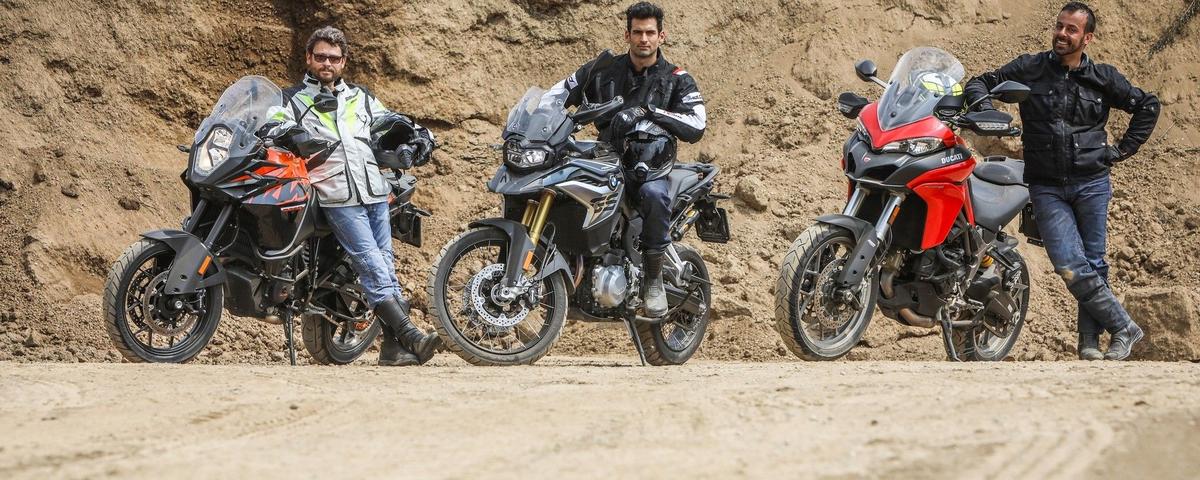
Introduction: The Ultimate ADV Showdown
The adventure motorcycle segment has never been more competitive. For 2026, three titans stand above the rest: the BMW R 1300 GS, the KTM 1290 Super Adventure R, and the Ducati Multistrada V4. Each represents a different philosophy--BMW's refined all-rounder, KTM's off-road weapon, and Ducati's sport-touring masterpiece. We spent 500 miles on pavement and 100 miles on dirt to determine which machine deserves your garage space.
Key Stat: Combined, these three models account for over 60% of the premium ADV market in the US, with BMW alone selling more than 20,000 GS units annually.
Our testing included highway cruising at 80 mph, twisty backroads, gravel fire roads, and technical single-track. We evaluated power delivery, suspension compliance, electronics, ergonomics, and real-world fuel economy. Here's what we discovered.
1. BMW R 1300 GS: The New Benchmark
BMW completely reengineered its iconic GS for 2024, and the 2026 model refines that formula. The 1,300cc boxer twin now produces 145 horsepower and 110 lb-ft of torque, but the real story is the 12 kg (26.5 lb) weight reduction. At 525 lb fully fueled, the R 1300 GS feels noticeably lighter than its predecessor, especially when maneuvering at low speeds or picking it up off the ground.
The adaptive electronic suspension (Dynamic ESA) is a game-changer. It automatically adjusts damping based on road conditions, load, and riding mode. On our 500-mile highway loop, the GS floated over expansion joints and potholes that would rattle lesser bikes. The optional radar-based adaptive cruise control maintains a set following distance, reducing fatigue on long slogs.
Starting at $20,000, the R 1300 GS isn't cheap, but it includes features that competitors charge extra for: heated grips, keyless ignition, and a 6.5-inch TFT display with BMW's ConnectedRide navigation. Off-road, the GS impresses with its new telelever front suspension that resists dive under braking while maintaining 8.3 inches of travel. However, the 33.5-inch seat height may intimidate shorter riders, and the boxer engine's cylinder heads can catch on rocks in extreme terrain.
2. KTM 1290 Super Adventure R: The Off-Road Champion
KTM's 1290 Super Adventure R is built for riders who prioritize dirt performance above all else. Its 1,301cc V-twin churns out 160 horsepower and 103 lb-ft of torque, making it the most powerful engine in this comparison. But raw power isn't the story--it's how KTM delivers it. The WP semi-active suspension offers 8.7 inches of front and rear travel, with 9.8 inches of ground clearance. That's enough to clear logs, rocks, and deep ruts that would high-center the BMW or Ducati.
Off-road, the KTM shines. The 21-inch front wheel and 18-inch rear (with optional tubeless spoked rims) roll over obstacles with authority. The six-axis IMU enables cornering ABS and traction control that can be dialed back or fully disabled for experienced riders. The Rally mode, borrowed from KTM's factory race bikes, allows you to adjust throttle response, engine braking, and traction control independently via the handlebar switches.
On pavement, the 1290 Super Adventure R is surprisingly competent. The WP suspension firms up nicely in Sport mode, and the 160 hp engine pulls hard from 3,000 rpm to redline. But the trade-off is wind protection--the small screen and minimal fairing leave your torso exposed at highway speeds. After 300 miles of interstate, we felt more fatigue than on the BMW or Ducati. Fuel range is also a concern: the 6.1-gallon tank delivers about 220 miles before reserve, compared to the Ducati's 340-mile capability.
3. Ducati Multistrada V4: The Sport-Touring Marvel
Ducati's Multistrada V4 redefines what an adventure bike can be. Its 1,158cc V4 Granturismo engine produces 170 horsepower and 92 lb-ft of torque, but the real innovation is the cylinder deactivation system. At cruising speeds, the rear cylinder bank shuts off, reducing heat and improving fuel economy. We averaged 48 mpg on our highway loop, giving a theoretical range of 340 miles from the 7.9-gallon tank--class-leading by a wide margin.
The radar-assisted adaptive cruise control and blind-spot monitoring are standard on the V4 S model ($24,000). The system works seamlessly, maintaining speed on descents and alerting you to vehicles in your blind spot via LED indicators in the mirrors. On the highway, the Multistrada is supremely comfortable. The seat is plush, the windscreen adjusts electrically, and the riding position is more upright than a sport bike but more aggressive than the GS.
Off-road, the Multistrada V4 is capable but not class-leading. The 19-inch front wheel and 6.7 inches of suspension travel limit its ability on rough terrain. The Enduro riding mode softens throttle response and disables rear ABS, but the bike's 530 lb wet weight and low ground clearance (compared to the KTM) make it a handful on single-track. For gravel roads and fire trails, it's fine. For serious off-roading, look elsewhere.
4. On-Road Ride Quality and Highway Comfort
We rode all three bikes back-to-back on a 500-mile loop that included interstate, two-lane highways, and winding mountain roads. Here's how they compare.
BMW R 1300 GS: The GS is the most comfortable highway bike of the three. The seat is wide and supportive, the windscreen provides excellent protection with minimal buffeting, and the cruise control is intuitive. The boxer engine's low center of gravity makes the bike feel planted at speed. Our only complaint: the engine produces a slight vibration through the pegs at 4,000 rpm.
KTM 1290 Super Adventure R: The KTM is the least comfortable on pavement. The seat is narrow and firm, the windscreen is too small for tall riders, and the engine's V-twin thrum is noticeable at highway speeds. However, the suspension is plush over bumps, and the cornering ABS inspires confidence in the twisties. If your riding is 80% off-road, the KTM is fine. For long-distance touring, it's a compromise.
Ducati Multistrada V4: The Ducati is the sportiest on-road bike. The V4 engine is smooth and powerful, the radar cruise control is the best in class, and the chassis is agile enough to keep up with sport bikes on a canyon road. The seat is comfortable for 8-hour days, and the electronic windscreen adjusts on the fly. The only downside: the V4 engine runs hot in stop-and-go traffic, and the fuel range is so good you'll forget to stop for gas.
5. Off-Road Capability: Which Bike Handles Dirt Best?
We took all three bikes to a 100-mile off-road course that included gravel, sand, mud, and rocky single-track. The results were clear.
KTM 1290 Super Adventure R: The KTM is the undisputed off-road king. The 21-inch front wheel, 9.8 inches of ground clearance, and WP suspension with 8.7 inches of travel make it feel like a dirt bike with a big engine. The Rally mode allows you to customize traction control and throttle response, and the Pirelli Scorpion Rally tires provide excellent grip on loose surfaces. The only challenge is the 160 hp engine--it's easy to spin the rear wheel in the wrong situation. Experienced riders will love it; novices should use Rain mode.
BMW R 1300 GS: The GS is a capable off-roader but not a specialist. The 19-inch front wheel and 8.3 inches of suspension travel are adequate for gravel roads and mild trails, but the boxer cylinder heads limit ground clearance in deep ruts. The Enduro Pro mode disables ABS and traction control for experienced riders, and the new telelever front end provides excellent stability under braking on loose surfaces. For 90% on-road/10% off-road riders, the GS is perfect.
Ducati Multistrada V4: The Multistrada is the least capable off-road. The 19-inch front wheel, 6.7 inches of travel, and 530 lb wet weight make it a handful on anything more than hard-packed gravel. The Enduro mode helps, but the bike's sport-oriented geometry and low ground clearance (8.5 inches) mean you'll be picking it up frequently on technical terrain. Stick to pavement and fire roads, and you'll be happy.
Conclusion: Which ADV Should You Buy?
Choosing between these three adventure motorcycles comes down to your riding priorities. If you want the best all-arounder that excels on pavement and handles dirt when needed, the BMW R 1300 GS is the clear winner. It's comfortable, capable, and refined. If you're an off-road enthusiast who spends weekends on single-track and only uses pavement to get there, the KTM 1290 Super Adventure R is your machine. And if you're a sport-touring rider who wants V4 power, radar cruise control, and 340-mile range, the Ducati Multistrada V4 is unmatched.
No matter which you choose, you're getting a world-class adventure motorcycle. The real question is: where will you ride it?