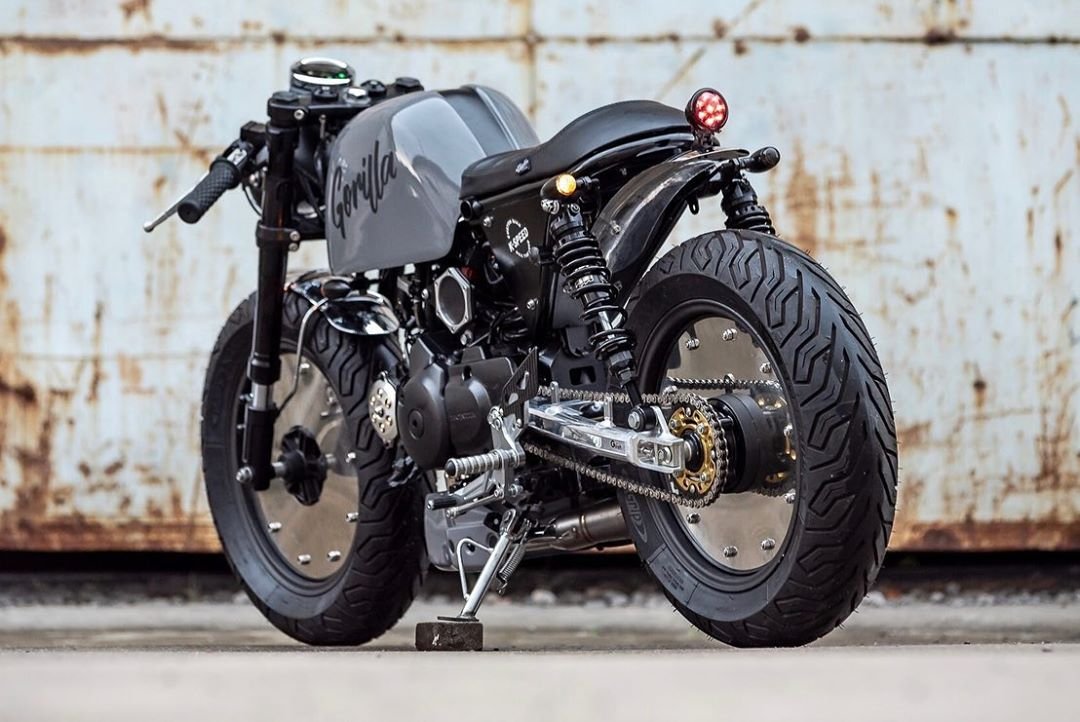
1. Choosing the Right Donor Bike: The Foundation of Your Build
The single most important decision in any cafe racer build is the donor bike. A good platform saves you time, money, and headaches. The classic choices are the Honda CB series (especially the CB350, CB550, and CB750), the Yamaha XS650, BMW Airheads (R-series from the 1970s-80s), and Suzuki GS models from the late 70s and early 80s. These bikes are abundant, parts are widely available, and they have the right geometry for the cafe racer silhouette.
What makes a good donor? Look for a bike with a steel frame (easy to modify), a twin-shock rear suspension (classic look), and a simple air-cooled engine. Avoid bikes with complex electronics, monoshock rear ends, or rare parts that are hard to source. The engine should be complete and turn over freely. Compression should be within spec on all cylinders. A non-running bike can be a bargain if the engine is sound and the frame is straight. Budget $1,000 to $2,000 for a decent donor. Spend more upfront on a cleaner bike and you'll save on restoration costs later.
Expert Tip: The Honda CB550 is widely considered the sweet spot for a first cafe racer build. It's light, has enough power for city riding and back roads, and aftermarket parts are plentiful and affordable.
Inspect the frame carefully for rust, cracks, or previous repairs. The title must be clean. Check the VIN matches the title. A bike with a salvage title is not worth the hassle for a first build. Look for a bike that has been stored indoors. Rust in the tank is a major red flag -- it can be cleaned but adds significant time and cost. The wiring harness should be intact, even if the bike doesn't run. Rewiring a bike from scratch is a major project best left to experienced builders.
2. Essential Modifications: The Classic Cafe Racer Silhouette
The cafe racer look is defined by three key modifications: clip-on handlebars, rear-set foot pegs, and a solo seat cowl with a tail tidy. These changes transform the riding position from upright to a forward-leaning, aggressive stance that mimics the original cafe racers of the 1960s. Clip-on handlebars attach directly to the fork tubes, lowering your hands and shifting your weight forward. Expect to spend $50 to $150 for a quality set. Pair them with bar-end mirrors for a clean look.
Rear-set foot pegs move the pegs back and up, tucking your feet under your hips. This completes the racing posture. Universal rear-set kits are available for most popular donor bikes for $100 to $300. You may need to modify the shift linkage and brake rod. The seat cowl is the most visible change. A fiberglass or ABS solo seat replaces the stock bench seat. Prices range from $100 for a basic unit to $400 for a custom upholstered piece. The tail tidy removes the bulky stock fender and turn signals, cleaning up the rear end. A simple tail tidy kit costs $30 to $80.
These three mods alone can transform a standard UJM (Universal Japanese Motorcycle) into a convincing cafe racer. Do them in order: handlebars first (they affect the most controls), then foot pegs (they affect shifting and braking), then the seat and tail tidy (purely aesthetic but high impact). Take your time with the wiring for the tail tidy -- a clean install makes the difference between a professional build and a hack job. Use heat shrink connectors and route wires neatly along the frame.
3. Engine and Exhaust Upgrades: Performance and Sound
The heart of any cafe racer is its engine. For most donor bikes, a carburetor rebuild is the first step. Carburetors from the 1970s and 80s are likely gummed up from old fuel. A rebuild kit costs $20 to $50 per carb and includes new gaskets, jets, and seals. Clean the carb bodies thoroughly with carb cleaner and compressed air. Set the float heights to spec. Synchronize the carbs using a vacuum gauge set ($40). This alone can restore lost power and smoothness.
For fuel-injected bikes (like later Suzuki GS or BMW models), consider an ECU flash or a piggyback tuner. A Power Commander or similar device costs $300 to $500 and allows you to optimize the fuel map for your new exhaust. Speaking of exhaust, the signature cafe racer sound comes from a 4-into-1 header with a reverse cone megaphone muffler. This setup is lighter than stock, looks period-correct, and produces a deep, aggressive note. A complete exhaust system costs $200 to $600. Avoid cheap eBay knockoffs -- they often fit poorly and sound terrible.
Other engine upgrades to consider: a high-flow air filter (pod filters are classic cafe racer style, $20-$50), electronic ignition conversion (replaces points, $100-$200), and a lighter flywheel (improves throttle response, $150-$300). For more power, a big bore kit or performance camshaft can be added, but these are advanced projects. Focus on making the engine run reliably first. A well-tuned stock engine with a good exhaust and pod filters will be plenty of fun for street riding.
4. Paint and Aesthetics: The Vintage Patina Look
The cafe racer aesthetic is about stripping away everything unnecessary. The goal is a purposeful, minimalist look that evokes the racing machines of the 1960s. Start by removing all non-essential parts: fenders, side covers, passenger pegs, and the stock airbox. This reduces weight and cleans up the lines. The tank is the centerpiece. Classic racing colors include British Racing Green, deep red, silver, and black. Two-tone paint schemes with a contrasting stripe are iconic. A professional paint job costs $500 to $1,500. For a budget build, consider rattle-can paint with careful prep work. Use high-quality automotive primer, base coat, and clear coat. Wet sand between coats for a smooth finish.
Tank decals add authenticity. Reproduction decals for classic brands like Dunlop, Castrol, or Pirelli are available for $10 to $30. Apply them after the paint has cured for at least a week. Clear coat over the decals to protect them. For the frame, powder coating is the most durable option. A full frame powder coat costs $200 to $400. If you're on a tight budget, brush-on chassis paint (like POR-15) works well and is very durable. The engine cases can be cleaned and painted with high-heat engine enamel. Silver or black are classic choices.
For the vintage patina look, some builders intentionally leave the bike slightly worn. A few scratches on the tank, a faded seat, and weathered metal give the bike character. This is a legitimate aesthetic choice and can save money on paint. Just make sure the bike is mechanically sound. A patina bike that runs perfectly is far cooler than a show-quality paint job on a bike that won't start. The key is consistency -- if you go for patina, everything should look appropriately aged, not just the tank.
5. Budget Breakdown: Realistic Cost Expectations
Building a cafe racer on a budget is absolutely possible, but you need to be realistic about costs. Here's a phase-by-phase breakdown for an entry-level build on a $1,000 to $2,000 donor bike. Phase 1: Donor bike and basic mechanicals. Budget $1,000 to $2,000 for the bike itself. Add $200 to $500 for a carburetor rebuild, new tires, brake pads, and fluids. This gets the bike running and stopping safely. Phase 2: The cafe racer silhouette. Clip-on handlebars ($50-$150), rear-set foot pegs ($100-$300), seat cowl ($100-$400), and tail tidy ($30-$80). Total: $280 to $930. Phase 3: Exhaust and intake. 4-into-1 header with muffler ($200-$600), pod filters ($20-$50), and jet kit ($50-$100). Total: $270 to $750.
Phase 4: Paint and aesthetics. Tank paint ($100-$500 for DIY, $500-$1,500 for professional), frame powder coat ($200-$400), decals ($10-$30), and miscellaneous bits like grips, mirrors, and turn signals ($50-$150). Total: $360 to $2,080. Phase 5: Optional upgrades. Electronic ignition ($100-$200), lighter flywheel ($150-$300), performance cam ($200-$400), and upgraded suspension ($200-$600). Total: $650 to $1,500. Adding it all up, a complete budget build can be done for $2,500 to $4,500 total, including the donor bike. A more thorough build with professional paint and engine work can run $5,000 to $8,000.
The biggest cost variable is labor. If you do all the work yourself, you save thousands. If you pay a shop for engine work, paint, and wiring, the cost can double. Be honest about your skills. A simple build with a clean donor, bolt-on parts, and rattle-can paint is achievable for most DIYers with basic tools. A full restoration with engine rebuild, custom wiring, and professional paint is a different level. Start small. Build a bike that runs well and looks good from 10 feet. You can always refine it later. The most important thing is to get it on the road and enjoy the ride.